
Introduction to Gyudon
What is Gyudon and Why Should You Make It?
Gyudon, a beloved dish from Japan, is more than just a meal; it's a comforting experience that brings the flavors of thinly sliced, tender beef together with a savory-sweet sauce that dances on your taste buds. Often served over a fluffy bed of rice, this dish is typically topped with a runny egg, which adds a luscious richness that takes each bite to a new level. If you're looking to impress your dinner guests or simply treat yourself to something special, gyudon is a fantastic choice.
So, why should you make gyudon? For starters, it’s quick and easy—perfect for those busy weeknights when you don't have time for elaborate cooking. The ingredients are simple and affordable, making this dish accessible for anyone. Plus, the combination of flavors makes it a family favorite! According to Just One Cookbook, gyudon is often dubbed “the ultimate comfort food” in Japan, and after one taste, you'll see why.
Whether you're new to cooking or an experienced chef, gyudon is a delightful dish that’s sure to impress and satisfy. Grab your ingredients and get ready to craft your very own Japanese beef and rice bowl!
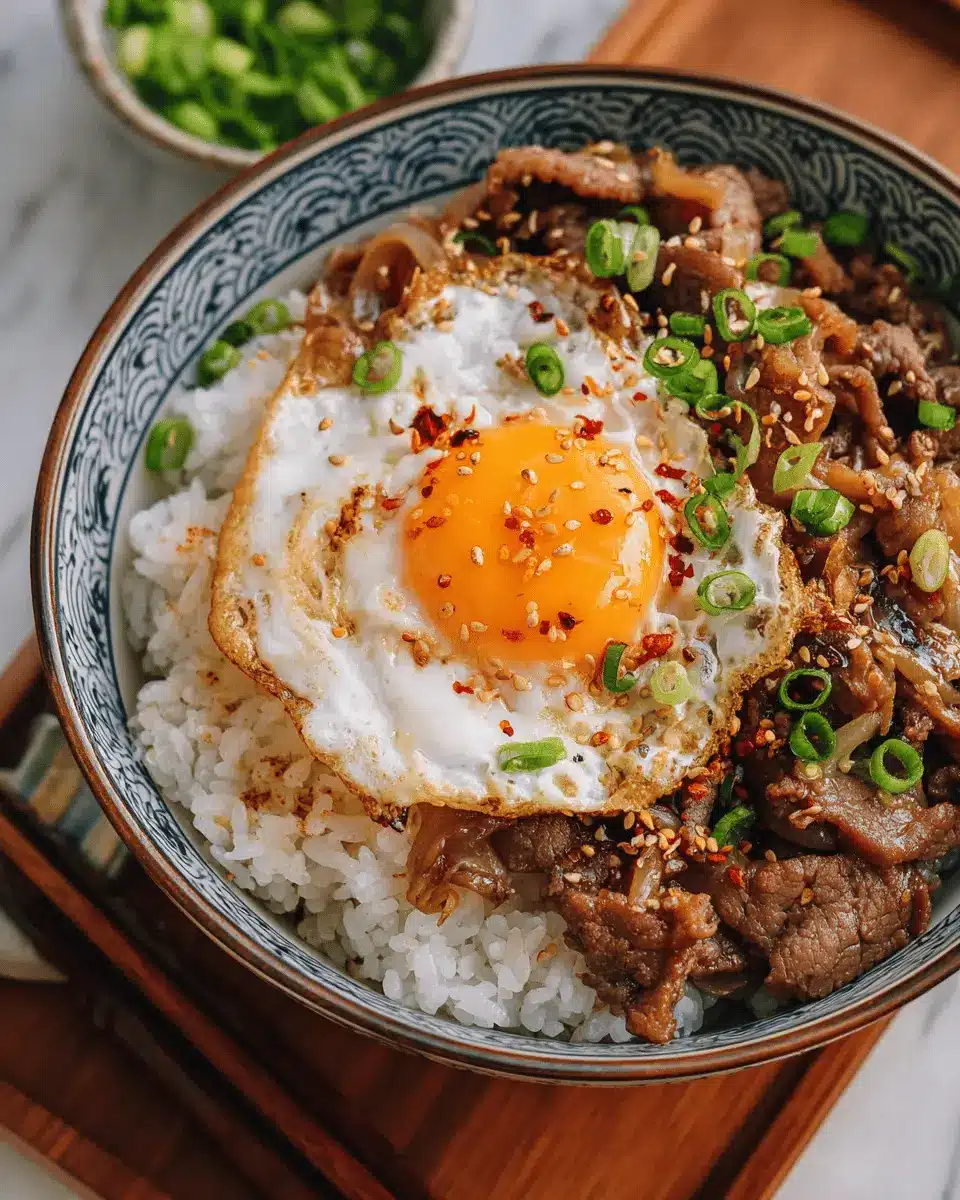
Ingredients for Gyudon
Essential ingredients for a delicious gyudon
Creating a mouth-watering gyudon starts with a few key ingredients. To whip up this comforting Japanese beef and rice bowl, you’ll need:
- Neutral oil (like vegetable or canola) for cooking
- 2 medium onions, thinly sliced for a sweet and savory base
- 1 pound of very thinly sliced beef (fatty beef chuck or ribeye works best)
- 2 teaspoons sugar to balance the savory flavors
- 2 tablespoons mirin for that characteristic sweetness and depth
- 2 tablespoons soy sauce to add umami richness
- 1 cup dashi stock (substituting beef or chicken stock is fine)
- 4 eggs to crown your dish with creamy goodness
- 4 cups cooked white rice (short or medium grain is ideal)
These essential ingredients promise to create a gyudon that’s truly restaurant-worthy!
Optional ingredients for added flavor and texture
While the basics will get you started, consider elevating your gyudon with these optional ingredients:
- 1 scallion, chopped for a fresh crunch
- 2 teaspoons toasted sesame seeds for a nutty finish
Feel free to experiment; perhaps add some bamboo shoots or shiitake mushrooms for extra texture! You can find more flavor inspiration from resources like Just One Cookbook or Japanese Cooking 101. Happy cooking!
Preparing Gyudon
When craving an authentic Japanese comfort food, look no further than gyudon! This delicious beef and rice bowl is not just a meal; it’s an experience that brings families together. Let's break this down into easy-to-follow steps so you can whip up the perfect gyudon at home.
Gather and prepare your ingredients
Before you dive into cooking, gathering your ingredients is crucial. Here’s what you’ll need:
- Neutral oil (like vegetable or canola)
- 2 medium onions, very thinly sliced
- 1 pound of very thinly sliced beef (fatty cuts like chuck or ribeye work best)
- 2 teaspoons sugar
- 2 tablespoons mirin (a sweet rice wine)
- 2 tablespoons soy sauce
- 1 cup dashi stock (or substitute beef or chicken stock)
- 4 fresh eggs
- 4 cups of cooked white rice (short or medium grain is preferred)
- A sprinkling of chopped scallion and toasted sesame seeds for garnish.
Make sure your kitchen is stocked with these essentials—it can save you a last-minute rush!
Sauté the onions to perfection
Start by heating a generous splash of neutral oil in a large skillet over medium-high heat. Add in those finely sliced onions and sauté them for about 10 minutes. Stir them often, letting them caramelize. The goal is to achieve a sweet, golden hue, which will serve as a base layer of flavor for your gyudon. If you want tips on how to get that perfect caramelization, check out this guide to sautéing onions.
Cook the beef and create the sauce
Once your onions are beautifully golden, it’s time to incorporate the beef. Add your thin slices of beef along with the sugar. You’re looking to brown the beef lightly, infusing it with the sweet onion essence. Then, pour in the mirin, soy sauce, and your choice of stock. Bring this bubbling goodness to a simmer and let it cook for another 10-15 minutes. This reduction process creates that delectable sauce we all love—so don’t rush it! Taste as you go; adjust the seasoning if you crave a bit more umami.
Fry the eggs sunny-side up
While your beef simmers to perfection, it’s time to tackle the eggs. Heat a small amount of oil in a separate non-stick or cast-iron skillet. Crack the eggs in, aiming for a sunny-side-up finish. Ideally, you want those yolks to remain soft and runny, ready to enrich your gyudon bowl. Don’t worry if you can’t fit all the eggs in at once; just cook them in batches!
Assemble your gyudon bowl
Now comes the fun part! Grab four serving bowls and start with a generous helping of cooked white rice at the bottom. Top each bowl with a portion of the savory beef and its sauce, then place a sunny-side-up egg on top. For an extra fancy touch, garnish with chopped scallions and a sprinkle of toasted sesame seeds. Voilà! You’ve created a simple yet stunning gyudon feast that’s sure to impress.
By following these steps, you’ll not only have a delicious homemade gyudon but also a newfound appreciation for this traditional Japanese dish. Enjoy every bite of your culinary creation!
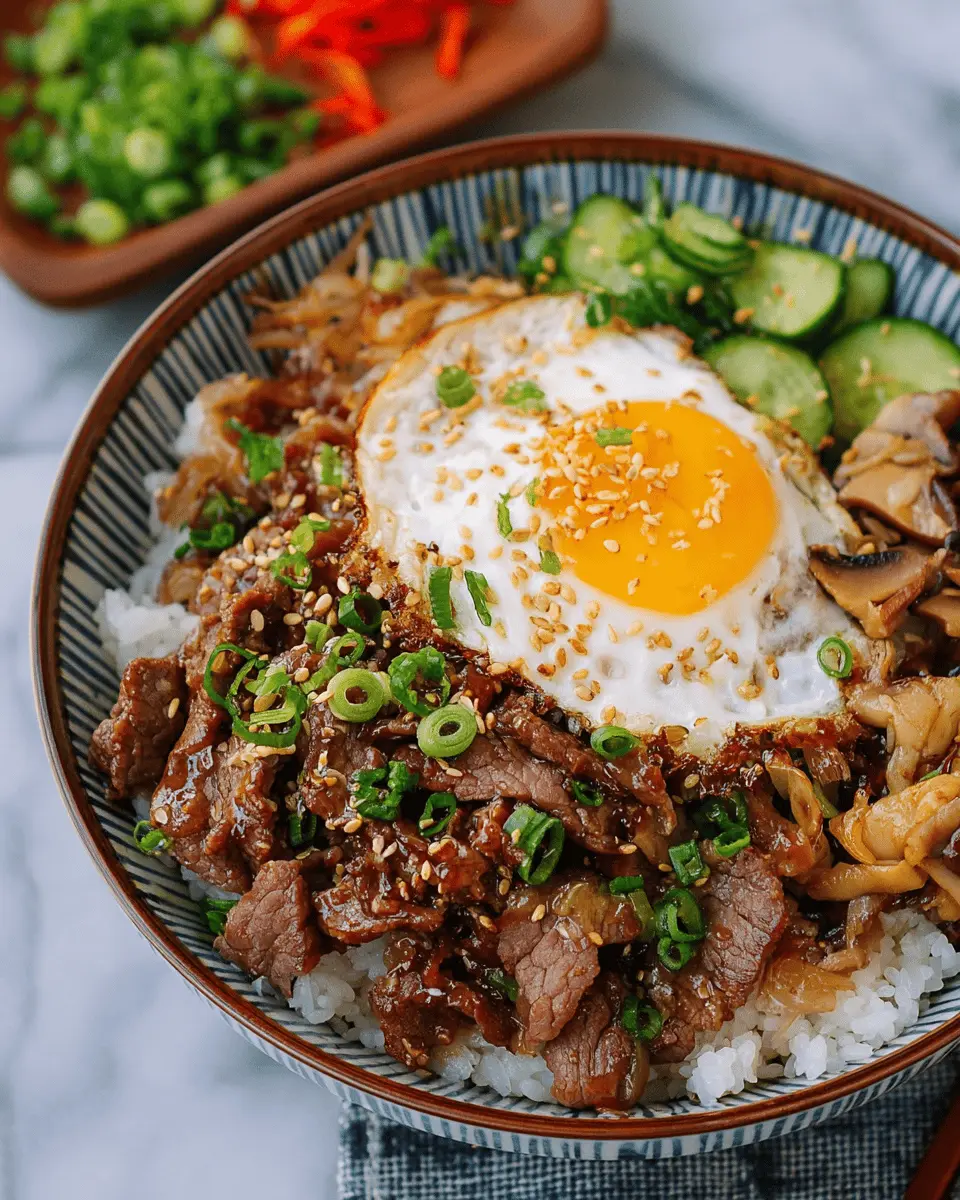
Variations on Gyudon
Vegetarian Gyudon Options
Looking for a meatless alternative? Consider using tofu or tempeh as the protein base for your gyudon. Simply marinate these ingredients in a mix of soy sauce, mirin, and a hint of sesame oil to develop rich flavors. Pair them with sautéed mushrooms and fresh vegetables. You'll create a vibrant, satisfying dish that retains the essence of traditional gyudon while being entirely plant-based.
Spicy Gyudon Twist
If you're a spice lover, try adding some gochujang (Korean chili paste) or shichimi togarashi (seven-spice blend) to the simmering beef mixture. This not only elevates the flavor profile but will also satisfy your craving for heat. You can serve it alongside pickled vegetables for a crunchy contrast that complements the richness of the gyudon. Spice it up and enjoy a delightful fusion dish!
For more on variations, check out this guide to Japanese cuisine.
Cooking Tips and Notes for Gyudon
Choosing the Right Beef Cut
When preparing gyudon, the cut of beef you select can make all the difference. Opt for fatty cuts like chuck or ribeye, as the marbling enhances both flavor and tenderness. Thinly slicing the beef is essential; a quick freeze can make it easier to achieve those perfect slices. If you need detailed slicing tips, consider checking out Serious Eats for valuable advice.
Enhancing Flavor with Garnishes
Garnishes may seem minor, but they elevate your gyudon experience! A sprinkle of chopped scallions adds freshness, while toasted sesame seeds introduce a delightful crunch. For an extra layer of flavor, try drizzling a bit of soy sauce right before serving. Feeling adventurous? Add pickled ginger on the side—it adds a nice zing! Remember, presentation matters, so take a moment to arrange your toppings artfully. Happy cooking!
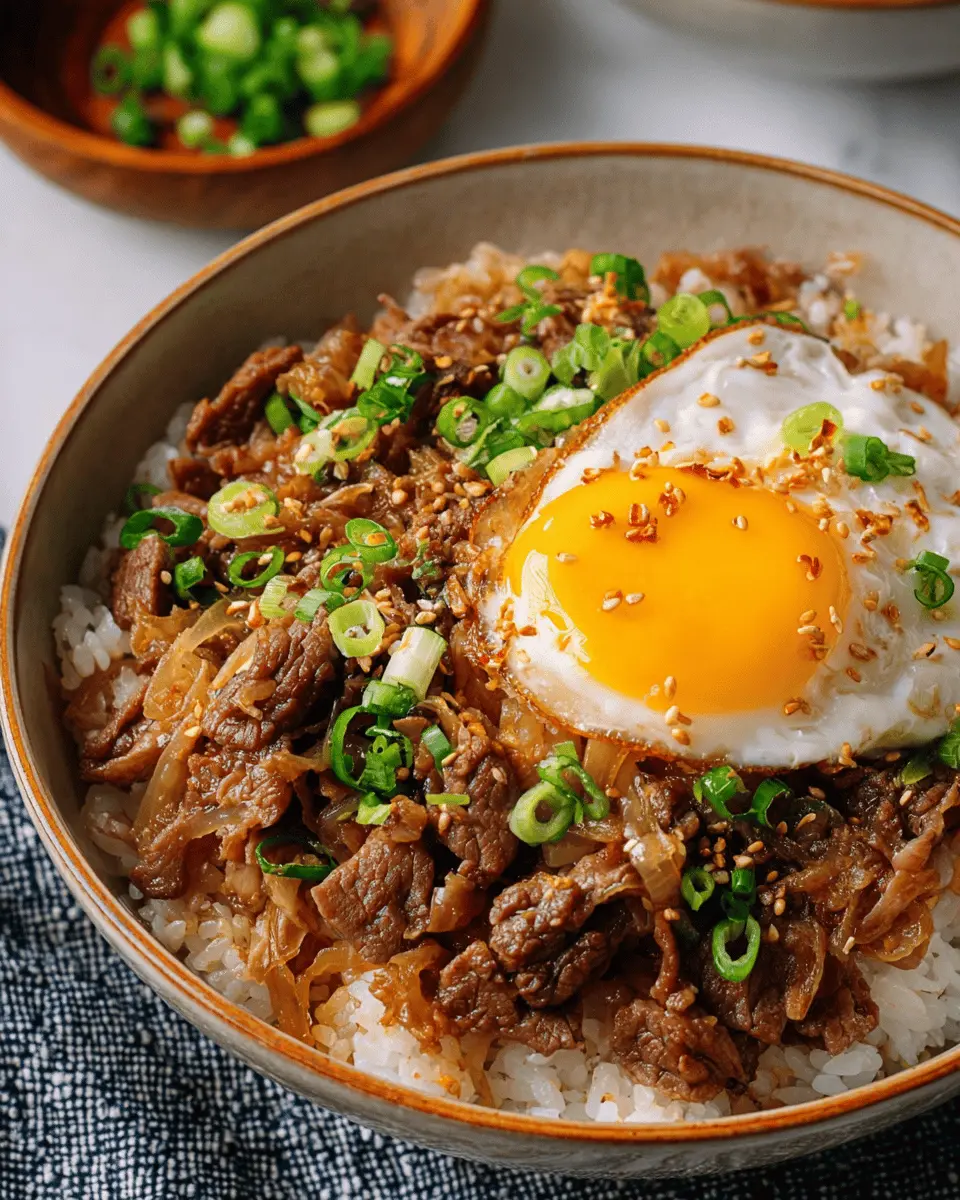
Serving suggestions for Gyudon
Perfect pairings for your gyudon bowl
To elevate your gyudon experience, consider garnishing with fresh toppings. A sprinkle of chopped scallions or toasted sesame seeds adds a delightful crunch and a burst of flavor. You might also enjoy a drizzle of spicy chili oil or a few slices of pickled ginger on the side to complement the savory beef. For a refreshing drink, a chilled green tea or sparkling water with lemon perfectly balances the richness of this dish.
Creative ways to serve gyudon for a group
When hosting a gathering, turn your gyudon into a fun and interactive meal! Set up a gyudon bar where guests can build their own bowls. Include a variety of toppings such as soft-boiled eggs, sautéed mushrooms, and even microgreens for a modern twist. You could also serve gyudon alongside other Japanese favorites like miso soup or edamame for a complete feast. This allows everyone to customize their experience and enjoy familiar flavors in a new, exciting way.
Time breakdown for Gyudon
Preparation time: 10 minutes
Kickstart your culinary adventure with a quick prep! Slice your onion and beef thinly to save time later on.
Cooking time: 30 minutes
A straightforward simmering process transforms simple ingredients into a flavorful Gyudon.
Total time: 40 minutes
In just 40 minutes, you'll go from ingredients to a delicious Japanese beef bowl filled with savory goodness. Perfect for busy nights!
For more tips on Japanese cooking, check out sources like Just One Cookbook or Japan Centre. Enjoy your Gyudon!
Nutritional Facts for Gyudon
Understanding the nutrition behind your favorite dishes can enhance your dining experience. Here’s a quick look at the nutritional facts for Gyudon, a delicious Japanese beef and rice bowl:
Calories
A single serving of Gyudon packs in approximately 598 calories, making it a hearty meal that sustains energy levels without sacrificing flavor.
Protein
With about 36 grams of protein per serving, Gyudon is not just tasty; it’s also a great option for those looking to meet their daily protein needs, especially important for active young professionals.
Sodium
Keep an eye on sodium intake! Gyudon provides around 888 mg of sodium, which is something to consider if you're watching your salt consumption. Pair it with fresh vegetables to balance out sodium levels.
For more insights on healthy eating and nutrition, check out resources from the American Heart Association or the USDA. Enjoy your Gyudon, and savor every bite!
FAQs about Gyudon
Can I make gyudon ahead of time?
Absolutely! Gyudon can be prepared in advance and reheated when you're ready to eat. Simply store the cooked beef mixture in an airtight container in the refrigerator for up to 3 days. To serve, reheat the beef gently on the stove while cooking fresh rice. If you're using eggs, cook them just before serving for that perfect runny yolk!
What side dishes go well with gyudon?
Gyudon is delicious on its own, but pairing it with a few side dishes can elevate your meal. Consider serving it with:
- Miso Soup: A classic Japanese starter.
- Pickled Vegetables: Brighten up your bowl with a tangy crunch.
- Seaweed Salad: Adds a refreshing flavor contrast.
For more ideas, take a look at this Japanese side dish guide.
Can I substitute ingredients in gyudon?
Definitely! Cooking is all about making a dish your own. If you can’t find mirin, a mix of honey and water can work. For the beef, chicken or tofu can be used for an alternative protein. Don't hesitate to adjust the recipe based on what you have; gyudon is flexible and forgiving!
Conclusion on Gyudon
In conclusion, gyudon is a delightful dish that captures the essence of comfort food with its savory flavors and satisfying textures. Perfect for busy weeknights or a relaxing weekend meal, it can easily become a family favorite. Try making it at home and savor the authentic taste of Japan!
Gyudon (Japanese Beef & Rice Bowls)
Equipment
- large skillet
- cast iron skillet or non-stick skillet
Ingredients
- 2 tablespoons neutral oil such as vegetable or canola oil
- 2 medium onions very thinly sliced
- 1 pound very thinly sliced beef fatty beef chuck or ribeye
- 2 teaspoons sugar
- 2 tablespoons mirin
- 2 tablespoons soy sauce
- 1 cup dashi stock can also substitute beef or chicken stock
- 4 eggs
- 4 cups cooked white rice short grain or medium grain preferred
- 1 scallion chopped
- 2 teaspoons toasted sesame seeds optional
Instructions
- Heat the neutral oil in a large skillet over medium high heat, and cook the sliced onions for about 10 minutes, stirring often.
- Add the beef and sugar, and cook until the beef is slightly browned. Add the mirin, soy sauce, and stock. Bring to a simmer, and cook for about 10-15 minutes to reduce the stock into a thin sauce. Taste for seasoning, and add a little more soy sauce if needed.
- Meanwhile, heat another couple tablespoons of oil in a cast iron or non-stick skillet. Cook the eggs sunny-side up. You can cook them in batches if needed. The yolks should still be runny!
- When the beef is done simmering, divide the rice among serving bowls, and top with the beef and an egg for each bowl. Garnish with chopped scallion and toasted sesame seeds, if using.



Leave a Reply